
Why Do Dogs Eat Poop – And How To Stop Them!
The scientific term for poop eating is coprophagia. And most of those writing to me about a dog with coprophagia are very upset. The chances are, if your dog has this problem, you are upset too. But I hope by the end of this article, you will feel a lot better
- Coprophagia in dogs
- Why do female dogs and puppies eat poop?
- Coprophagia and diet
- Training your dog to leave poop alone
Since I first wrote about poop eating in dogs several year ago, I have received many emails from people who have dogs that eat their own poop, or the poop of other animals.
Let’s take poop eating seriously
People want to know “why is my dog eating his own poop” and “will my dog get sick from eating his poop”.
But they also need to be supported through the horrible feelings that owning a poop eating dog can cause
Owners of a poop eating dog are often revolted by their dog’s behavior and report that their feelings towards their dog have changed since the problem started.
These feelings need to be addressed, not ignored or dismissed.
You’ll want to find a solution to the problem too!
Whether your dog is snacking on his own poop, or raiding the cat litter box, you will want to know how to stop your dog eating poop as quickly as possible.
I’ve revisited this topic today, because it is an important one, and because I wanted to bring you the latest information on why do dogs eat poop, and on how to stop a dog eating poop.
We’ll be looking at the causes and solutions to poop eating and at how to make sure that this problem doesn’t cause a breakdown in your friendship with your dog.
Coprophagia in dogs
Poop eating is often swept under the carpet. But eating feces can be a serious problem for some dogs that do it – I’ll explain why in a moment.
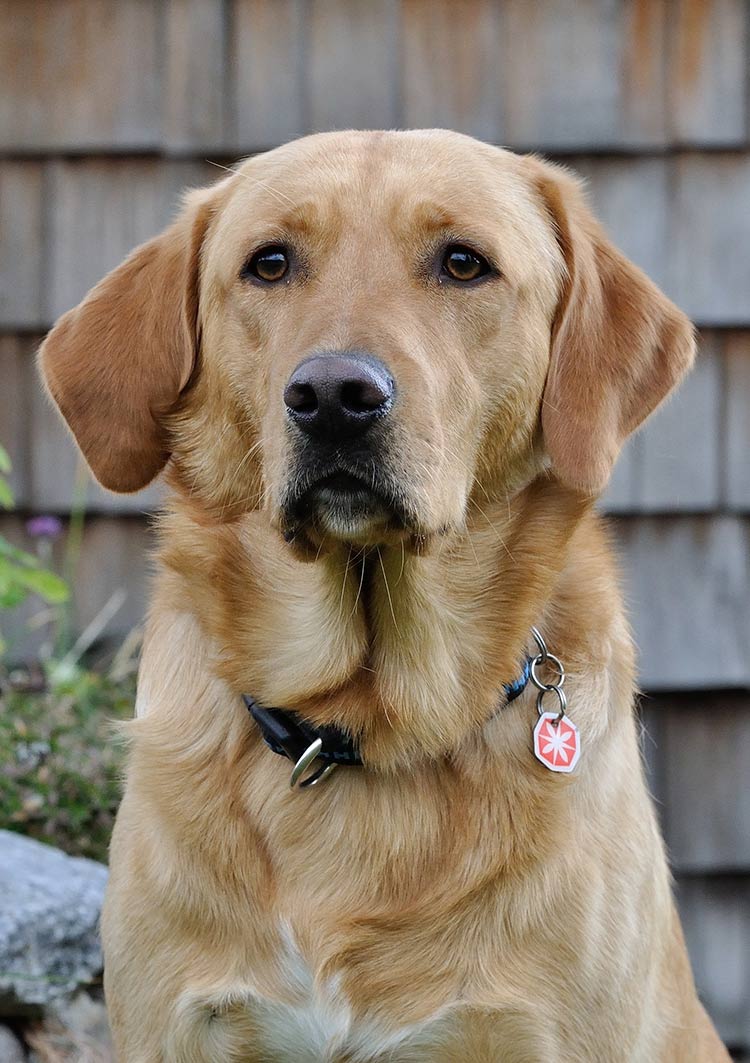
What is more, owning a dog that eats poop, especially a dog that eats his own poop, is often a hugely distressing problem for many dog owners.
And, it is a frequently reported problem in Labradors and other sporting dogs.
Before we answer your questions, including “why do dogs eat their poop” and before we look at the various techniques you can use to stop a dog eating poop, let’s find out just how rare or common this problem actually is.
Not only can it really help to know that you are not alone, and that many other dog owners have this problem too, it also helps us to understand our dogs a little better
Which dogs eat poop?
According to the late Sophia Yin, who reports on a study published in 2012, 16% of dogs are serious poo eaters.
A previous study published in 2008 on dogs eating poop showed that nearly half of all dogs had eaten feces at some point and 28% were confirmed poop eaters
The Hart study showed that there were some breed differences.
There weren’t enough dogs in the study for a definite list, but none of the poodles in the study ate their own poop for example. And more than a third of Border Collies did.
Judging from my inbox, coprophagia is common in Labradors too.
Coprophagia is linked with size
A study published in Colorado in 2010 showed that sporting dogs generally were more likely to be coprophagic.
Body weight is a factor in this behavior, but only in the sense of being related to size.
Dogs that were heavier because they were obese, are no more likely to be affected.
Age is often considered to be a factor in poop eating, but the 2010 Colarado study did not support the theory that poop eating is more common in puppies.
Coprophagia is linked with neutering
The current evidence points to neutering as being a major factor in the development of coprophagia.
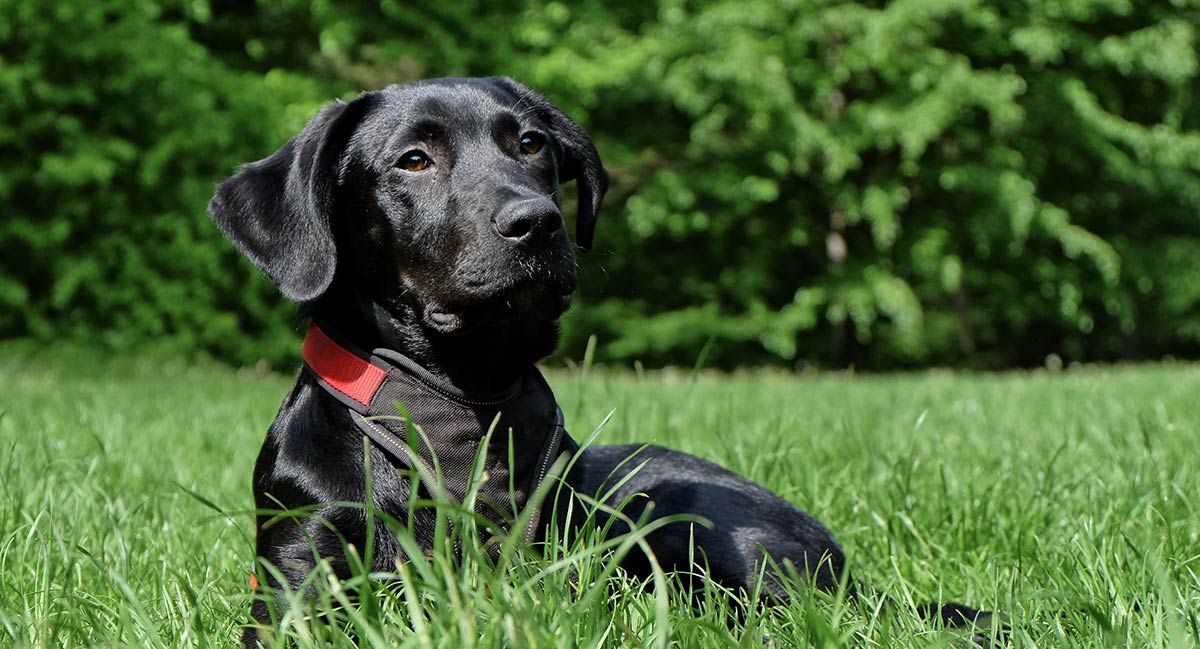
Dogs that had been spayed or castrated were more likely to be reported as eating poop than dogs left in possession of their sex hormones.
In the Hart study the biggest culprits were spayed females. In the 2010 study carried out at the Colarado University neutering drastically increased the incidence of coprophagy in male dogs but had no effect on females.
Both studies agree however that neutering is a major cause of coprophagia, and seems to be more significant than any environmental factor
Coprophagia may be more common than we think
Interestingly, the true figure for the percentage of dogs that eat poop may be even higher than these studies suggest.
Data from the studies was based on owner reports and the results of another study published in 2014 that identified dogs which are coprophagic and compared that data with owner reports, suggests that under-reporting by owners is a factor.
So it isn’t just your dog eating poop. There are lots of them. But why do they do it?
It may depend partly on the type of poop being consumed
Why do dogs eat their poop – different causes
There are plenty of facts and theories around why dogs eat poop.
And plenty of guesswork too.
Let’s look at what we know first and then build on that
Why female dogs eat poop
All mother dogs have an instinctive urge to eat their puppies’ poop. After giving birth and for the next three weeks female dogs lick each puppy’s bottom until he poops and or pees, and then swallow the results.
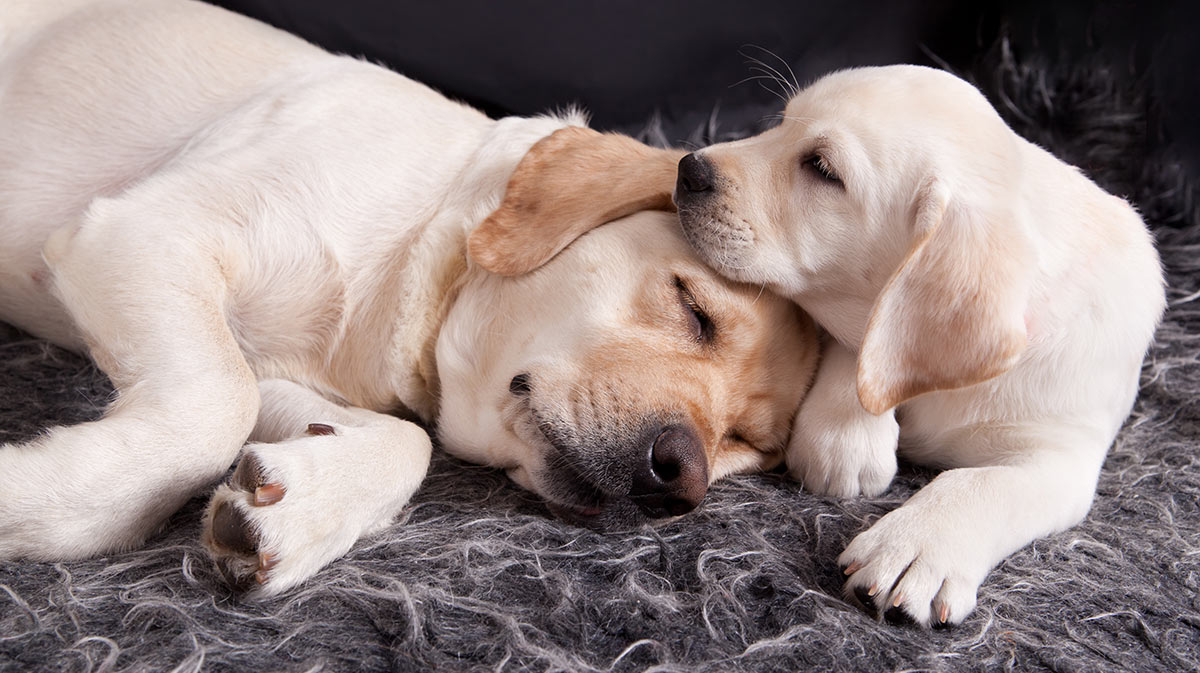
The licking helps to stimulate the puppy’s natural digestive process, and consuming the results helps to keep the nest area clean
A clean nest in wild dogs is important both from a hygiene point of view and to avoid attracting predators
So from this, we can see that nature has provided female dogs with a poop eating instinct which is always triggered by the process of giving birth and suckling puppies.
And it’s not a great stretch to see that this maternal instinct could easily last longer than it should or arise inappropriately when it isn’t needed.
We can also see that keeping a nest area clean may well be a trigger that could apply to male dogs too.
And it could explain why some male dogs eat poop that they find in their own back yard.
Why do puppies eat poop?
Like babies, puppies explore the world with their mouths. Everything and anything goes into it.
If what goes into the mouth tastes like food, then puppies may swallow it. In theory, some poop eating puppies will grow out of it, whereas for others it becomes a habit.
Though as we have seen, there is some disagreement as to whether this is even a puppy issue, and whether poop eating is actually more common in puppies than in adult dogs
“But, but..!” you cry “wait a moment, what is this ’tastes like food’ you speak of?” poop doesn’t taste like food – surely?
Well it would seem that some dogs would disagree with you. And that might be partly to do with the way we feed our dogs these days.
Coprophagia and diet
In times gone by, dogs were fed a largely natural diet of mainly meat, bones and a few scraps, which dogs as carnivorous scavengers could digest almost in its entirety.
What came out the other end was fairly boring.
Nowadays most dogs are largely fed on a pelleted cereal-based food known as kibble.
This kibble contains all the nutrients a dog needs, but it also contains a number of additives to make the food taste palatable.
After all, no food manufacturer wants your dog to turn his nose up at their product. So tasty is the key. And very tasty they are too.
Do flavour and fillers in dog food make poo eating more likely?
In addition to strong flavourings, kibble contains quite a lot of ‘fillers’.
Substances which bulk up the nutrients and give the food structure.
Much of this ‘filler’ is not needed by the dog, and passes out in its faeces. This is why kibble fed dogs produce larger quantities of faeces than raw fed dogs.
But remember those flavourings we just talked about? Well the faeces of the kibble fed dog are not only bulky, they are also highly flavoured.
Now we can see why, as the popularity of kibble feeding grows, it is possible that more dogs may be turning to poo eating as a means of grabbing that extra snack during the day. Poo is getting tastier. That is my theory anyway!
Can changing diet influence coprophagia
Some studies into why dogs eat poop, have shown that dogs with deficient diets or that are poorly nourished are more likely to eat poop. A study on Beagles in 1981 showed that feeding a deliberately deficient diet triggered coprophagia ( among other problems) for example.
If an undernourished coprophagic dog is switched to a nutrient rich nourishing diet, in theory that change may stop the poop eating behavior
But most modern dogs that eat poo are not nutritionally deficient and are fed a balanced diet with all the nutrients they need.
So switching brands for example, is unlikely to stop your dog eating poop.
In fact I have not found any strong evidence for dietary changes reducing coprophagia in well fed dogs, though there is something you might want to consider (see below) and I have some anecdotal evidence to report
Sophia Yin, when discussing the Ben Hart study pointed out that the study, based on questioning dog owners, noted that diet did not play a part. However, the vast majority of dogs are fed on kibble, and there is no indication as to what diets were compared or how. The comparison could have been between different types of kibble, or between kibble and household scraps.
The 2010 study also showed no link between diet and poop eating, but 89% of the dogs in the study were kibble fed
An interesting paper called Coprophagia – food for thought” published in a Canadian Veterinary journal in 1988 states that diets high in carbohydrate tended to “enhance the drive to eat stool” Unfortunately they don’t state how they came to this conclusion
My personal experience is that changing my dogs from a diet of kibble (carbohydrate based pellets of commercial dog food) to a natural raw diet of meaty bones, has been accompanied by the disappearance of most poop eating in my adult dogs.
With some exceptions – as you will see. It seems that the jury is still out on whether raw feeding is a reliable way to stop dogs eating poop.
Why do dogs eat cat poop
The second most common question I am asked about poop eating, is “why does my dog eat cat poop” followed closely by “how to stop my dog eating cat poop”
If you think your dog is a bit of a freak for eating the contents of your cat’s litter tray, it may be of some comfort to know that Blackwell’s veterinary handbook classifies eating cat poop as completely normal in dogs of all ages.
That’s right – it’s official – your dog is not disturbed or depraved. He is normal.
Virtually all dogs will eat cat poop if given the opportunity.
I have had chance to rediscover this for myself first hand recently, as I am currently raising a young kitten. Two of my labs, one of which has never eaten poop in her life, plus the spaniel I mention below, have all attempted dawn raids on the litter tray.
I have now secured the litter tray behind a baby gate which the cat can slide through and the dogs cannot.
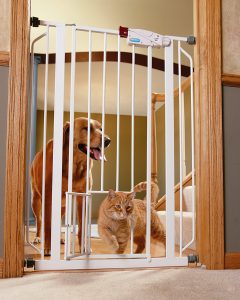 (paid link)
And this is likely to be the best solution to the problem.
If your dog is a pretty good jumper, you’ll need a taller gate.
My thirteen year old spaniel can clear a standard baby gate with consummate ease, so I’ve bought one with a cat flat.
My gate was meant to go across the bathroom door, but the bathroom doorway is extra narrow, so we have fitted it across the hallway instead.
Why is my dog eating rabbit poop
Blackwells comes to the rescue again with the answer to “why do dogs eat rabbit poop”
It’s to do with undigested vegetable matter which is very attractive to dogs, and may even be an important source of nutrients in wild dogs.
The same applies to ungulate feces – An ungulate is an animal with a hoof.
It is completely natural for a dog to enjoy eating horse poop, sheep poop, deer poop etc too. And almost all dogs will enjoy the feces of these animals.
It isn’t just your dog.
However, you may have a friend whose dog never eats poop, of any kind. So why is your dog different?
Why does my dog eat poop (when my friend’s dog never does)
Eating poop often starts by accident – perhaps beginning as a puppyish habit, – and from this opportunistic behavior, poop eating sometimes develops into a habit.
If your friend’s dog is male and yours is female, you are more likely to have a problem. For the reasons we have looked at above, coprophagia is more common in female dogs, but some male dogs do still eat poop.
Also for the reasons above, dogs are more likely to eat poop from animals that have a lot of digested vegetable matter in their feces, again, experts consider this normal
But some dogs do eat carnivore poop, such as the poop from wild foxes or the poop of other dogs, or even their own. And this tends to be the behavior that most upsets us humans
Your dog is also more likely (much more likely) to eat poop, of any kind, if he or she is neutered, but no-one seems to know why that is.
Why do dogs eat their poop – some conclusions
Poop eating can start in puppyhood and may become a habit if it persist in adult dogs.
Dogs that eat their own poop may be attracted to the flavor (switching to a raw diet may help in this case)
The same applies to dogs that eat other dogs’ poop, though a change of diet is not going to help with that one.
Dogs that eat poop in their yard may also be trying to ‘keep their den clean’ and some dogs may eat poop due to boredom or an inappropriate diet.
There is also evidence that poop eating is more likely in dogs that already have behavioral problems such as anxiety or pica (eating plants, stones, and other inedible items)
However, we also know that well balanced, well fed, physically and emotionally healthy dogs can also be poop eaters. In fact most poop eating dogs probably fall into this category.
The simple truth is, that poop eating, while thoroughly objectionable to us, is so common as to be normal in the domestic dog. And we will probably never find out exactly why dogs eat poop on a case by case basis.
In a moment we’ll come to what you can do about it, but let’s first find out what poop eating does to your dog.
Can dogs get sick from eating poop?
There is definitely a risk that your dog could get parasites from eating the poop of other dogs. However, worming your dog regularly should prevent this causing him any serious health problems
There is also a risk that your dog could transmit or spread parasites that don’t actually affect dogs. The potential for parasites sometimes found in cat poop fall into this category.
But in broad terms, coprophagia doesn’t normally cause illness in dogs. Most dogs have a digestion that is simply unaffected by common pathogens that could make you or I very ill.
How does poop eating harm dogs?
So, if eating poop doesn’t usually make dogs sick, how is it harmful?
The answer lies in a breakdown of the bond between the dog and his family.
This happens because humans are often shocked and disgusted by the behavior, and if they fail to address it swiftly, may abandon their dog
Most dogs come to no harm directly, from poop eating. But, indirectly, it can lead to dogs being re-homed or abandoned.
Many owners find poop eating upsetting and embarrassing. I hear quite a lot of dog owners issue ultimatums on this one.
“This has to stop or he’ll have to go”
“I can’t put up with this, we have children to consider”
The implication being that the dog will no longer be welcome in their home, if this horrible habit cannot be cured.
This is no minor problem
It is an issue that can lead to disaster for the dog.
Very often the reasons given for abandoning the dog are to do with hygiene. The family say that they are worried that the dog will infect a family member with pathogens from the poop he has eaten,
But I suspect the underlying cause is more fundamental than that. After all, most people are happy to share an ice-cream with a dog that licked his bottom a few minutes earlier.
The truth is, that whether we like it or not, persistent poop eating may seriously reduce the love that a person feels for their dog.
This is an issue that is not often raised. But I think it is a significant one.
The distress caused by poop eating in dogs
I think it is important that we don’t underplay the distress that poop eating causes in some families.
For those of us that have been associating with dogs for many years, some of their finer habits are pretty familiar, but for many people with a first dog, poop eating behavior is a terrible shock and a very real concern.
The important thing to tell you is that most of us more seasoned dog owners once felt the same way. We shouldn’t feel embarrassed to say “my dog eats poop” but most of us are, or at least were at one time!
You might feel, right now, that you will never truly love your dog again, but the chances are, you are wrong.
I know that I felt terribly disappointed when I caught my first poop eating dog ‘in the act’.
It was over thirteen years ago, soon after I had made the change from keeping mostly male dogs, to keeping mostly female dogs. And I was appalled and disgusted. I was even tempted to re-home her.
But I can tell you that she is still with me today, she is thirteen years old, rarely eats poop these days (never say never), and is one of my very dearest friends. So these things can be worked through.
How to stop a dog from eating poop?
There are lots of things you can try to prevent a dog eating his own poop at home. The first step is to remove the source of poo wherever possible.
This means being scrupulous about picking up after your dog, whenever he has emptied himself. Not always easy when you have a large yard or garden I know, but well worth the effort.
You may find it helpful, for a while at least, to go with your dog when you let him out for bathroom purposes.
That way, you can clear up immediately, and dispose of his feces securely, before he is tempted to settle down for a snack.
Flavoring your dog’s food
If your dog eats his own poop there are a number of theories about substances you can add to your dog’s meals, to counteract the nice flavours and make his poo taste unattractive.
Pineapple is a popular one, pepper powder another.
However, sadly, in most cases, these kinds of remedies do not work. And when they do, some find that they only work for a short while.
A few seem to have had some success, so you may think it worth a try.
Adding aversive flavors to poop
Another tactic often recommended is to sprinkle your dog’s poop with a substance that tastes horrid or that will create a burning sensation when he swallows it.
Chilli powder for example
But be aware that the studies carried out so far suggest that these two methods – adding substances to the dog’s diet or his poop, have a less than 2% success rate.
Which I think you’ll agree is a bit dismal
Making fundamental changes to your dog’s diet to reduce poo eating
Some people find raw feeding eliminates poop eating. But these reports (including mine) are anecdotal. They are not reliable evidence that such a switch will work for you
And moving over to a raw diet is a major change that needs to be considered from a range of different aspects, not just from the point of view of poop eating
You could also consider changing your dog to an alternative brand of dog kibble, which uses a far higher ratio of protein. (paid link)
If I can’t feed my dogs raw for any reason, I use Orijen food. But when I do this, I have to be very careful to pick up poops quickly, or my spaniel will revert to her old ways.
Not everyone has the time or resources to drastically change the method of feeding their dog.
So what other options are available?
Can punishment stop dogs eating poop?
The studies we have looked at showed that punishment – even harsh punishment didn’t work at all and caused further problems in some dogs.
In “Coprophagia – food for thought” the authors relate the story of Freddie, a neutered male poodle whose owners tried many different approached before eventually resorting to punishment.
This final step failed to cure Freddie and caused him to develop submissive urination – which only added to their problems
Can Training Reduce Poop Eating in Dogs
Of course, the methods above only work to prevent your dog eating his own poo.
If he has developed a taste for other dogs’ poop you have a much more challenging problem on your hands because you cannot control what goes into or comes out of, other people’s dogs.
The issue now becomes one of training your dog to ‘leave’ or to ‘recall’ away from the object of his desires, on command.
A reward-based programme of recall training in which you deliberately seek out dog poop in public places, and recall your dog away from it, to receive a tasty treat from you, will help you to prevent your dog eating other dogs’ poo in your vicinity.
I use the magic word system – which I find very effective
Can A Magic Word Help with Poop Eating?
I associate a powerful reward with a special word that I reserve just for the purpose of distracting the dog from poop.
Several times a day, for several days, I will say this ‘magic word’ whilst the dog is in the vicinity, and throw a fabulous reward on the ground for the dog
And when I say fabulous, I’m not talking about a bit of biscuit or some doggy treats that you bought from the pet shop
I’m talking ’seriously tasty treats’ here. Roast chicken is ideal.
At some point thereafter, when I see the dog approach a poo with a gleam in her eye, I will use my magic word and chuck the fabulous treat on the ground.
Sometimes, to begin with, the dog will scoff the poop, then come for the reward. You just have to accept this with a good grace.
Sometimes (often a bit further on in the process) she will bring the poo with her (eek!!).
Accept this too. It’s tough, but you can do it.
If your reward is good enough, your dog will soon abandon all thoughts of poo eating when she hears that word. She’ll start to drop the poop as she approaches you for her treat, and eventually won’t even bother to pick it up
Provided your treat is truly fabulous!
This really works if you are persistent, and if your Magic Word is kept strong with great rewards and mostly no requirement from the dog in order to get it.
You can find out more about Magic Word training in this article: Your Labrador’s Magic Word
General training to reduce poo eating in dogs
Joining in a training programme for an activity such as ‘agility’ or ‘gundog training‘ will help to provide your dog with exercise and mental stimulation in different locations where poo is not left lying around, and to keep his mind occupied.
These measure might just reduce your dog’s enthusiasm for poop eating generally. But there are no guarantees.
Ultimately you may have to accept that when your dog is out of your sight, or some distance away, there is little that you can do to prevent prevent him from indulging in this distasteful habit.
You will need to manage your poo eater’s free time and supervise him adequately in busy dog walking areas.
Why do dogs eat their poop – and how to stop them – a summary
Don’t let poop eating destroy your friendship with your dog. Around half of all dogs do it.
More if your dog is a gun dog breed like a Labrador.
Here are the factors that predispose a dog to poop eating
- Being female
- Being neutered
- Belonging to the sporting or gun dog group of dogs
None of these things can be changed now, so there’s no point fretting over them.
Poop eating can be embarrassing and distressing but remember that your smug friend’s dog is quite likely poop eating too, even if your friend doesn’t know it!
Remember also that eating poop most probably won’t do your dog any harm, or harm your family.
There are things you can do to greatly reduce poop eating.
And you will get over your horror and revulsion and feel good about your dog again.
What does NOT work to prevent coprophagia
Don’t waste time with punishment – and don’t ignore the problem. Neither will make it go away.
Here are the things that have been shown NOT to work in the fight against poop eating
 (paid link)
- Dietary additives (pineapple etc)
- Aversive flavors (pepper, chilli etc)
- Punishment (e-collars, rattle bottles, smacking etc)
Adding things to diet or poop had a less than two percent success rate, and if you are close enough to poop to sprinkle chilli on it, you are better off picking it up!
What does work to prevent coprophagia
Studies show conclusively that prevention and positive reinforcement training using tasty rewards are the key to success
- Preventing dogs having access to fresh poop wherever possible
- Training a strong ‘leave’ response (my magic word cue is a good example)
Start by a rigorous process of prevention. Clear up all poops immediately they are produced. Accompany your dog to the yard after meals, take a shovel, and remove all poops as soon as they appear!
Dispose of them securely.
Consider using a muzzle in some situations
Or use a leash if you are forced to exercise your dog in an area where there is poop lying around
Get a stock of high value treats in pots in your fridge and make sure you don’t run out. Take some with you when you take your dog for walk.
Teach the magic word cue and use it!
How about you?
Have you cured your dog of poop eating? Have you any tips to share with our readers?
Share your thoughts in the comments box below
Further reading
If you have enjoyed this article, you may also find this one helpful
References
Nijsse et al. “Coprophagy in dogs interferes in the diagnosis of parasitic infections by faecal examination.” Veterinary Parasitology 2014.
Hassan et al.“Behavioural conditions in dogs – a review: Part 1 – Disagreeable Normal Behaviours.” Nigerian Veterinary Journal 2009.
Broox G, Boze M “ Correlates of Coprophagy in the Domestic Dog (Canis Familialris) As Assessed By Owner Reports.” Journal of Applied Companion Animal Behavior 2010.
Tilley L, Smith F “Blackwell’s Five-Minute Veterinary Consult.” Canine and Feline
Blackwell’s Five-Minute Veterinary Consult: Canine and Feline.
Frenkel J, Parker B “An Apparent Role of Dogs in the Transmission of Toxoplasma gondii: The Probable Importance of Xenosmophilia.” 1996.
Read D, Harrington D, “Experimentally induced thiamine deficiency in beagle dogs: clinical observations.” American Journal of Veterinary Research 1981.
McKeown et al. “Coprophagia – food for thought” Can Vet J Volume 29, October 1988
Broox, Boze “A Comparison of Common Treatments for Coprophagy in Canis familiaris.” Journal of Applied Companion Animal Behavior Vol. 2.

Free Labrador Updates!
Get my training tips, news, reviews, and the latest from The Labrador Site delivered to your inbox
I hve a 10 yr old female lab who eats poo possum poo any poo the problem is i’tsin a bush area I’ve tried many methods to try and discourage it to no avail
There are conflicting views on how much exercise a puppy must get because of hips. Please give me your view. Thanks.
Hi Susan. There is no definitive research on this, and risk depends hugely on genetic factors. But for Lab puppies we find the ‘five minutes of formal exercise per day, per month of their age’ guideline helpful. This would include any exercise where you’re encouraging movement – going for walks, playing fetch etc, but doesn’t include exercise that is puppy-driven, such as playing in the back yard while you sit still and watch. I hope that helps! 🙂