
Giant Dog Breeds – The Biggest And Best Around
When you really love dogs, it just makes sense that bringing home one of the giant dog breeds means you have even more dog to love!
Of course, giant sized dogs need all the same things regular sized dogs need – just bigger.
For example, a Chihuahua dog bed might measure two feet by two feet at most.
A Great Dane bed, on the other hand, might be as wide as 5 feet across!
So before deciding that only the giant dog breeds will do for you, it can be worth taking a quick walk through your space while imagining how much of it any one of these giant dog breeds might require to really settle in and feel at home!
In this article, we take you on a meet-and-greet of some of the best giant dog breeds.
You will meet ancient giant dogs, friendly giant dog breeds, giant mountain dog breeds, and some super furry giant dog breeds!
Make sure to also check out big dog names if you’re looking at getting one of these huge dog breeds!
Is a giant dog breed for you?
Owning and caring for giant dog breeds can be a phenomenal experience.
Life itself can seem bigger, richer, and fuller with such an outsized canine other half at your side!
But life with a giant dog presents its challenges, too.
The most significant of these is what often amounts to a drastically shortened life span.
Where it is not uncommon for small dog breeds to live into the late double digits, their giant dog counterparts’ lifespans are frequently reduced by half and then some.
Here again, take the Chihuahua as an example.
This pint-sized pup can live as long as 20 years!
A Great Dane, on the other hand, can be lucky to make it to age six.
This is something you will want to be prepared for, ideally before you even bring your giant pup home for the first time.
Of course, it is impossible to prepare fully in advance for your dog to pass, but the shortened life outlook for a giant dog is not something you want to discover late in the game, either.
The other truly significant challenge you will likely face in caring for a giant dog breed is simply keeping your dog healthy.
Hip, elbow, knee, and shoulder problems represent just some of the many health problems giant dog breeds can face.
For this reason, it is absolutely vital to have your own trusted veterinarian examine any giant breed puppy you want to purchase or adopt.
And be sure to examine all available breeder health records for the parent dogs as well!
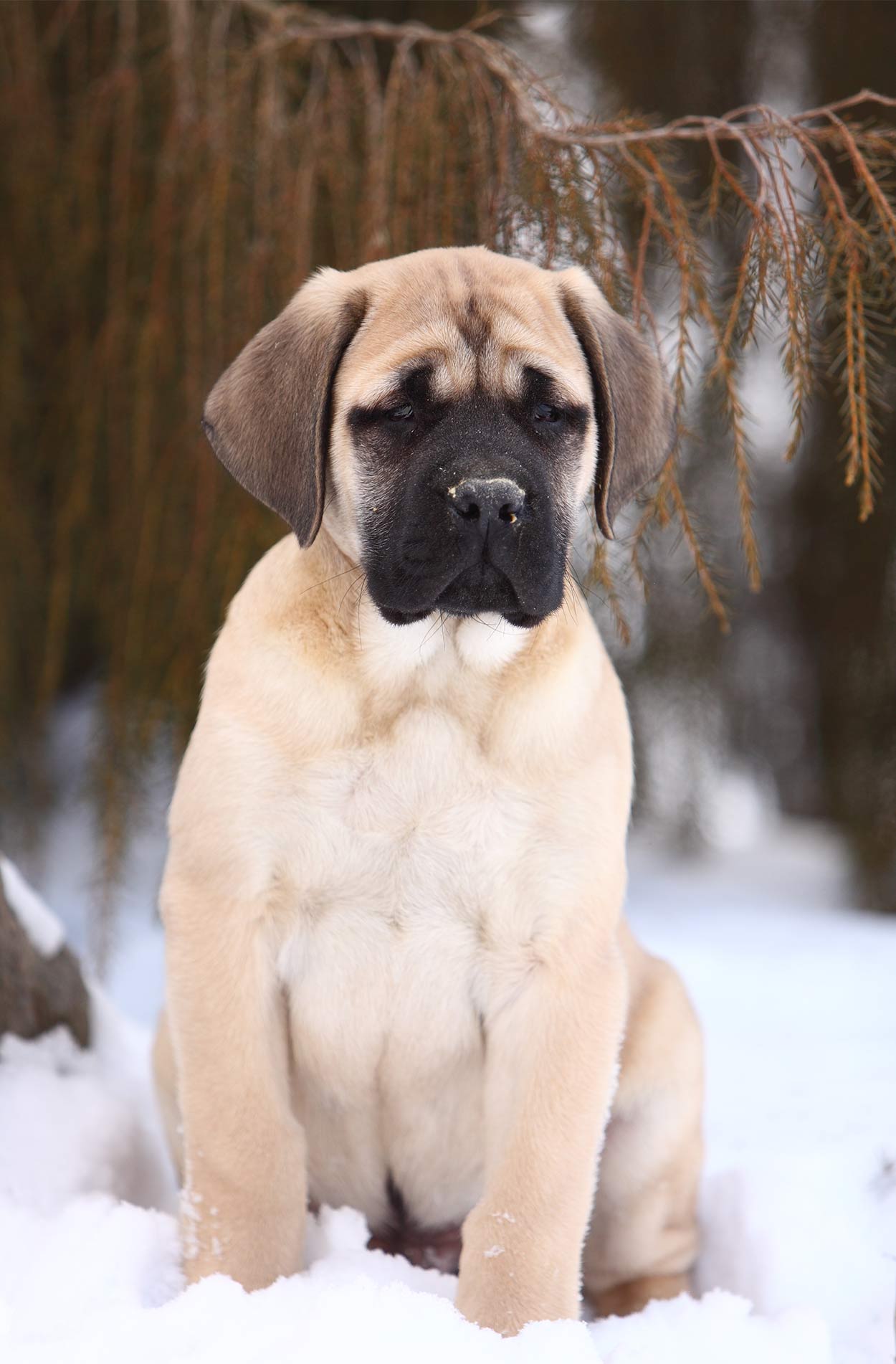
Giant Dog Breeds – English Mastiff
The giant dog known as the “mastiff” is one of the most ancient domesticated canine lines in existence.
Just think – 4,500 years ago, the very first mastiffs were being born!
Historical records tell us the original mastiffs were masterful hunters, to the point where famed warrior Kubla Khan kept a stable of (count ‘em) 5,000 hunting mastiffs!
While there are a rather amazing number of mastiff breeds today, when a dog is called simply a “mastiff,” this usually means the dog is an English Mastiff.
Today’s English Mastiff dogs are known to be gentle, personable companions that are great with young children and owners of all ages.
They are great guard dogs, with their formidable bark and daunting size, but in personality they are truly lovers rather than fighters.
English Mastiff Size
Size-wise, the English Mastiff typically weighs anywhere from 120 to 230 pounds and stands 27.5 to 30+ inches.
Males are usually heavier and taller than females.
However, it is worth noting that mastiffs can also grow much bigger!
Take Zorba, for example – a former World’s Heaviest Dog record holder who grew and grew and grew until he weighed in at a whopping 343 pounds and measured over 8 feet long!
Now that is a big pup!
The English Mastiff is currently ranked the 28th most popular dog breed (out of 192 American Kennel Club (AKC) dog breeds).
The English Mastiff has an all-too-short lifespan of 6 to 10 years.
English Mastiff Health
Mastiffs can suffer from a range of potentially heritable (genetic) health conditions, including eye issues, joint issues, bloat, cancer, kidney problems, heart disease, epilepsy, thyroid dysfunction, degenerative bone disease, blood clotting disease, and cervical disease.
Giant Dog Breeds – Saint Bernard
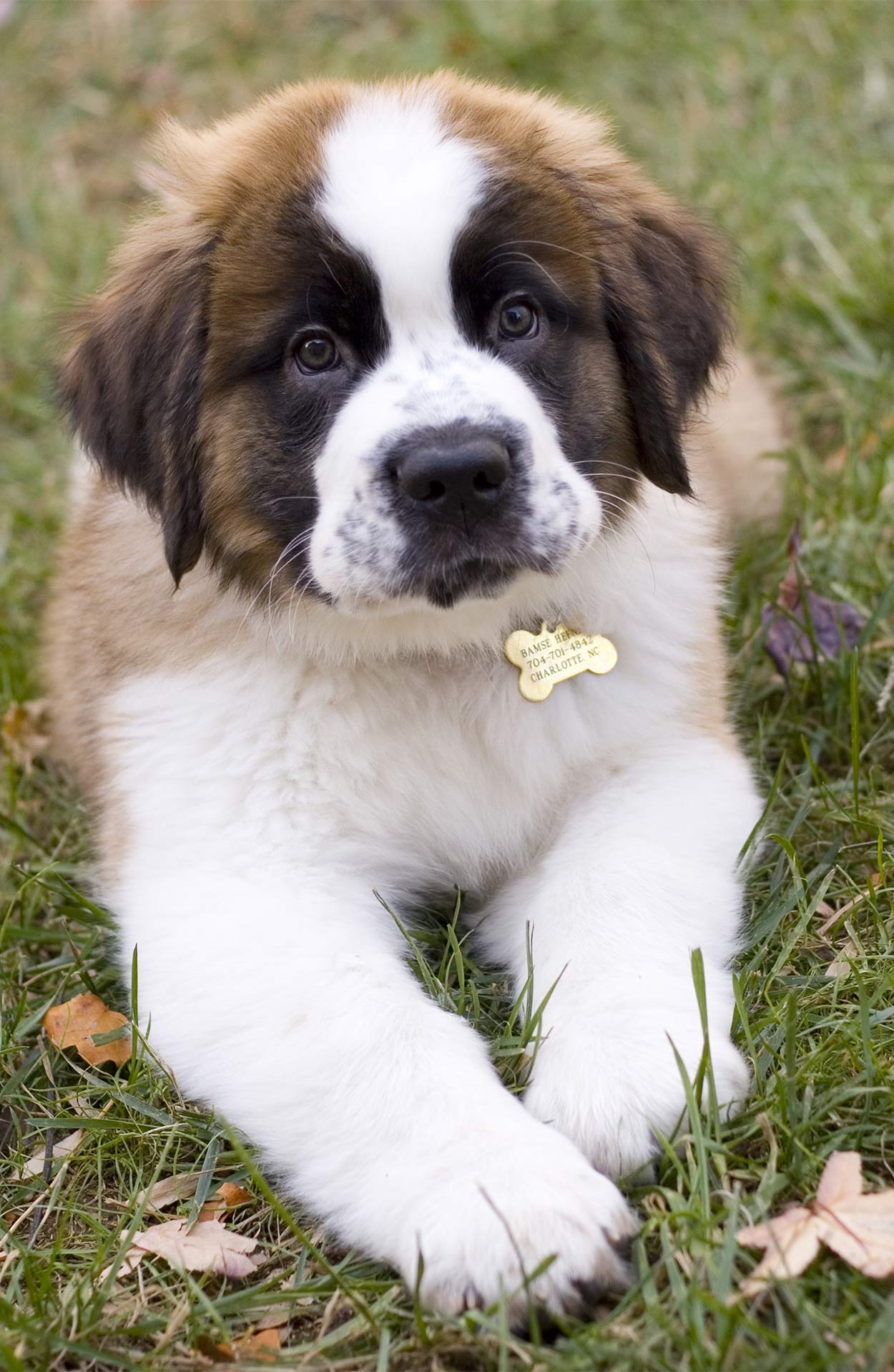
The Saint Bernard hails from the giant mountain dog breeds.
This gentle giant can reach 180 pounds and stand 30 inches high, although most females will be somewhat shorter and lighter.
These dogs are currently ranked as the 49th most popular dog breed (out of 192 American Kennel Club dog breeds).
They have the hit film “Beethoven” in part to thank for their continually rising popularity!
The Saint Bernard has pretty much been a hero and life-saver from day one.
This working dog can trace its lineage all the way back to a small hospice in the Swiss Alps, where these dogs were originally bred and trained to work with their monk counterparts to find and rescue travelers trapped by snow.
Saint Bernard Health
Today, like many giant dog breeds, the Saint Bernard is known to suffer from hip and elbow dysplasia (joint malformation), epilepsy, eye issues, and heart defects. Bloat is also a serious concern.
With an average lifespan of 8 to 10 years, the Saint Bernard could be considered one of the longer-lived of the giant dog breeds.
Giant Dog Breeds – Tibetan Mastiff
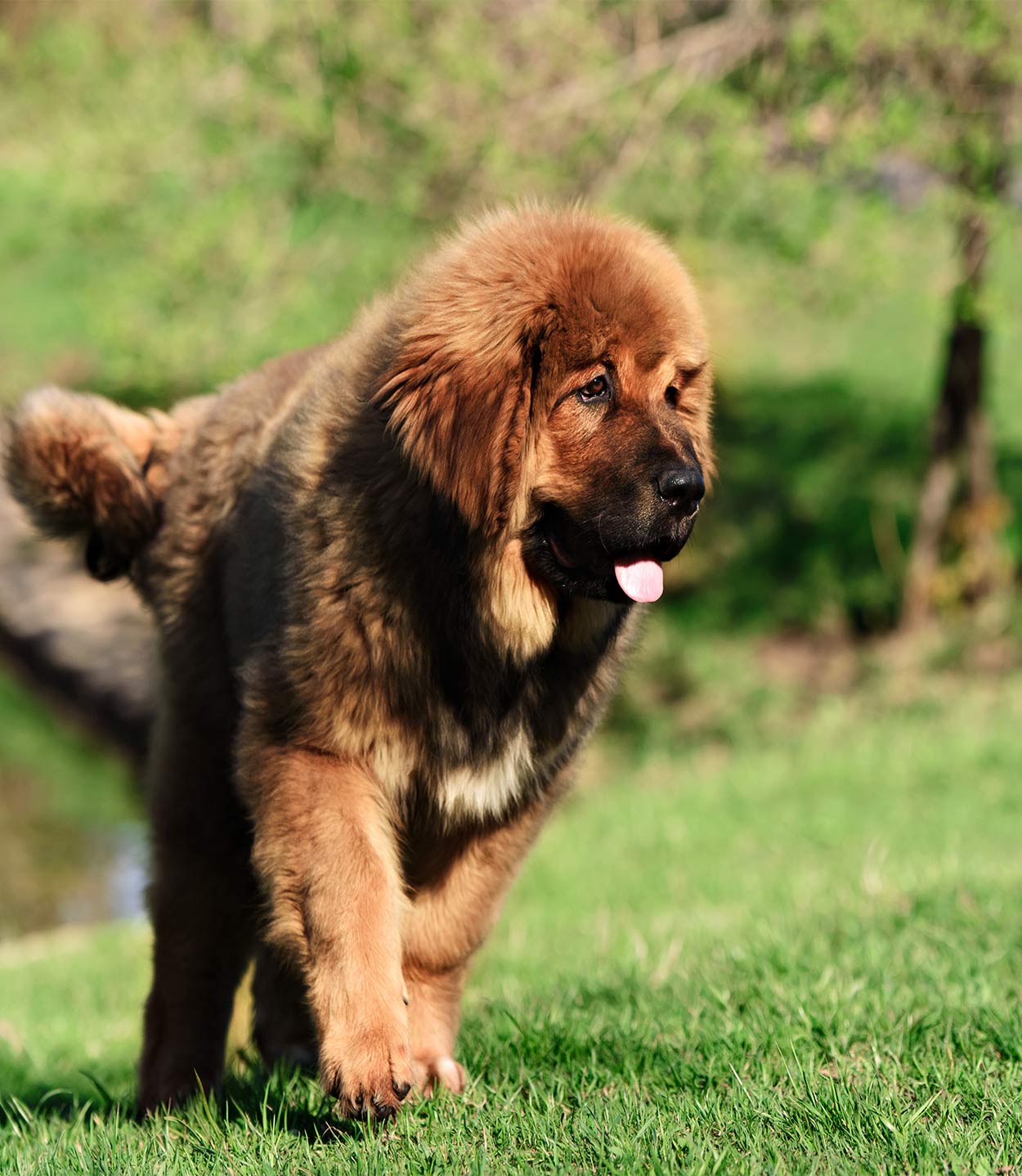
The Tibetan Mastiff has an imposing name, but in appearance you are looking at a true representative of the giant fluffy dog breeds!
However, in terms of temperament, this dog is not “fluffy” at all.
The Tibetan Mastiff was bred from ancient times to be a guardian dog and can trace its lineage as far back as 1100 B.C.
These giant dogs are very loyal and protective of “their” people, but are naturally reserved and can be suspicious of strangers (including children).
The Tibetan Mastiff can weigh anywhere from 140 to 170 pounds and stand up to 27 inches tall. Males are usually bigger and taller than females.
Currently, this dog breed is ranked as the 48th most popular dog breed.
Tibetan Mastiff Health
The Tibetan Mastiff can struggle with hip and elbow dysplasia (joint malformation), eye issues, underactive thyroid, a nerve disorder called demyelinative neuropathy, and epilepsy.
The Tibetan Mastiff lives just 7 to 9 years on average.
When you choose to share your life with a Tibetan Mastiff, it is important to know up front that your life together will be rewarding and also challenging, since these dogs need ongoing socialization and a calm home life in order to thrive and be an asset in their local community.
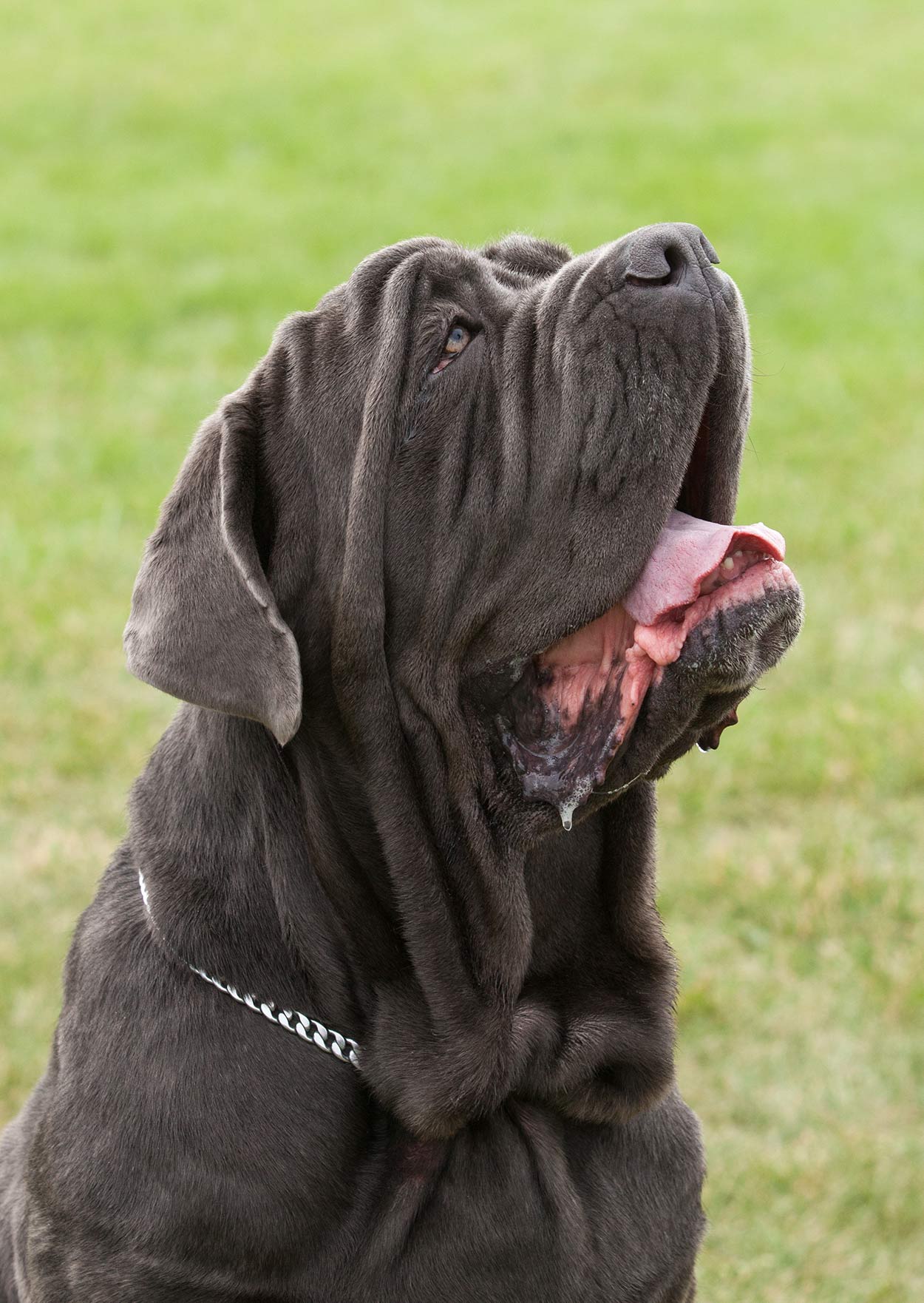
Giant Dog Breeds – Neapolitan Mastiff
The Neapolitan Mastiff can weigh from 110 to 150 pounds and stand from 24 to 31 inches tall. As with many giant sized dogs, the Neapolitan Mastiff males are generally taller and heavier than the females.
This giant dog breed currently ranks in the AKC as the 99th most popular dog.
These dogs are highly oriented to guard and protect “their” people and don’t tend to do well with strangers or same-gender dogs.
Even ongoing socialization may not be enough to calm the intense ownership these dogs feel towards “their” people.
Neapolitan Mastiffs may not be the best choice of dog for families with small children, both because of their sheer size and also because they can get jealous when an adult they are bonded with shows attention towards a child, even if that child is also a member of “their” family.
Neapolitan Mastiff Health
These dogs can suffer from some of the same health issues that plague many giant sized dogs, including bloat, heart issues, eye issues, cancer, and hip/elbow dysplasia.
They are also extremely heat-sensitive and a case of heat stroke can quickly become fatal.
The loose skin on their faces can also prove to be very uncomfortable for them.
The Neapolitan Mastiff typically lives from 7 to 9 years.
Giant Dog Breeds – Newfoundland
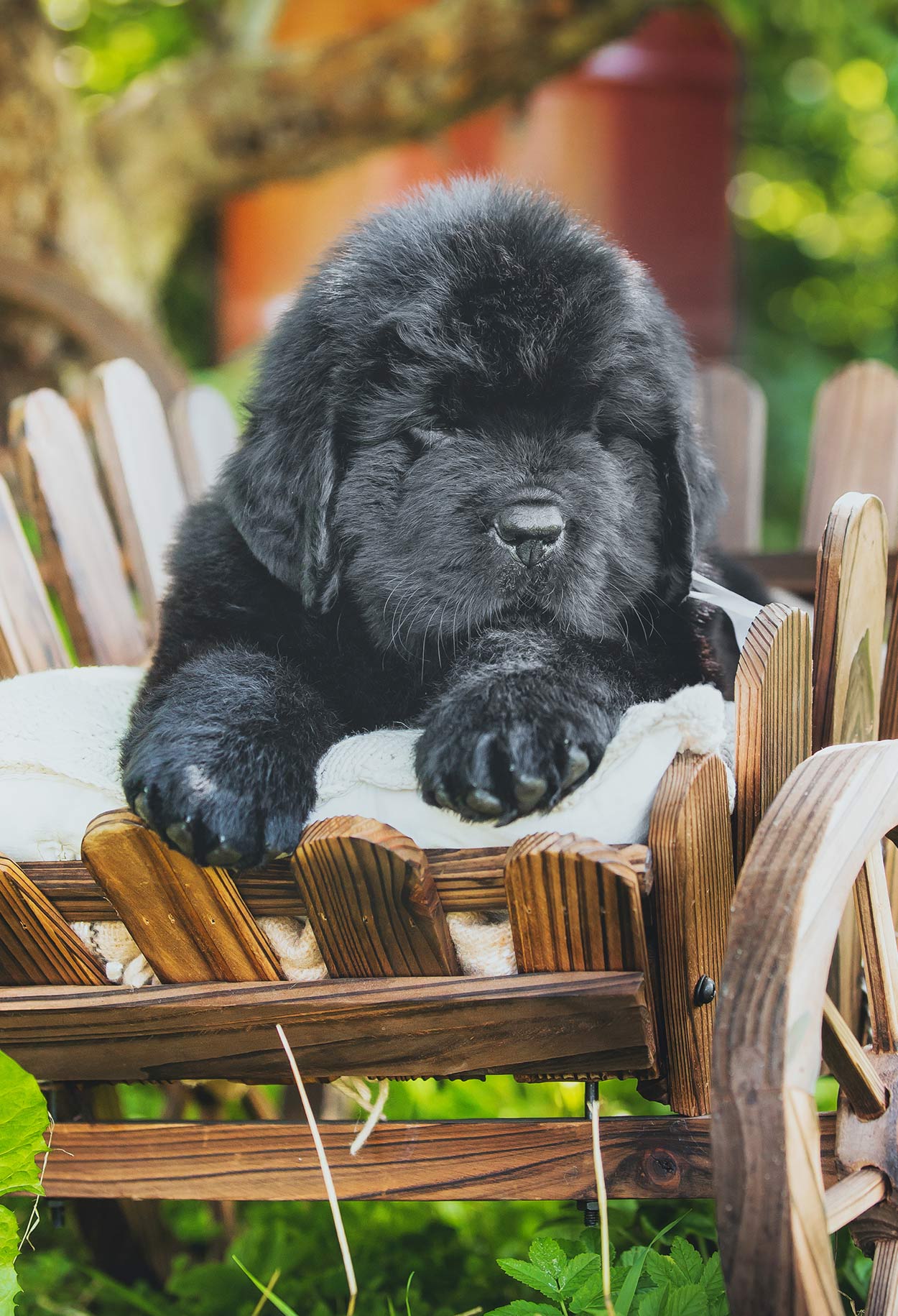
The Newfoundland giant mountain dog, or “Newf,” as enthusiasts often call them, has a slavishly devoted following, as befits a giant dog that seems to be all heart.
“Nana,” the nanny dog from the classic story “Peter Pan,” was a Newfoundland dog. So right from the start we are predisposed to love this fluffy, huggable giant dog breed!
Newfoundland Health
But Newfs can also have some debilitating health issues related to their size, including hip and elbow dysplasia.
Other known health issues include urinary stones, eye issues, and a potentially fatal heart condition called subaortic stenosis.
Otherwise, the Newf is one of the longer-lived giant dog breeds, with an average life expectancy of 9 to 10 years.
These dogs can weigh anywhere from 100 to 150 pounds and stand 26 to 28 inches tall, with males generally outweighing females.
The Newf currently ranks as the AKC’s 35th most popular dog breed.
Giant Dog Breeds – Great Dane
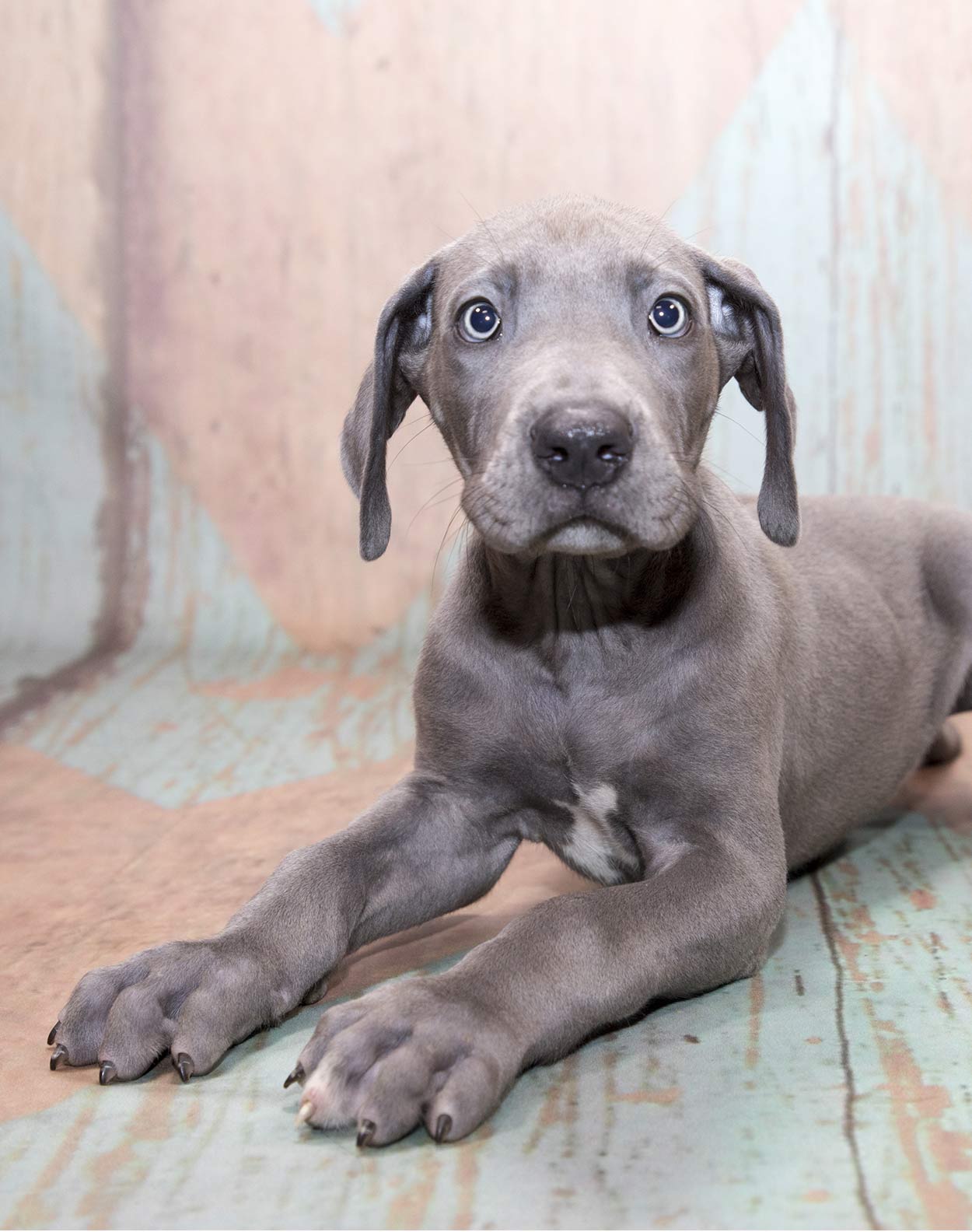
The Great Dane is widely known as a friendly giant dog – one of the few giant dog breed that most people can name on sight!
These dogs carry themselves so regally it is hard to imagine their ancestors ferociously taking down a huge wild boar, which is what this giant dog was originally bred to do!
Today, the Great Dane has gotten well acquainted with the couch life and has mostly left the hunting days far behind!
As the 14th most popular dog breed, Great Dane lovers are not even daunted by this dog’s all-too-short lifespan of around 6 years.
The typical Great Dane will weigh 110 to 140 pounds and stand 28 to 32 inches tall at adulthood.
However, there are certain exceptions!
Take Zeus, for example, who stood 3.67 feet high (44 inches) and captured the Guinness Book of World Records title of “World’s Tallest Dog.”
Sadly, Zeus passed away in 2014 at the tender age of five.
Great Dane Health
Great Danes suffer from a number of potentially serious health issues, including hip dysplasia, growing pains (panosteitis or hypertrophic osteodystrophy), heart issues, thyroid dysfunction, cataracts, cancer, and bloat.
Bloat is now ranked as the number one killer for Great Danes.
However, there is a preventative surgery that can be done.
The surgery is something to seriously consider if you want to adopt or purchase a Great Dane.
Giant Dog Breeds – Leonberger
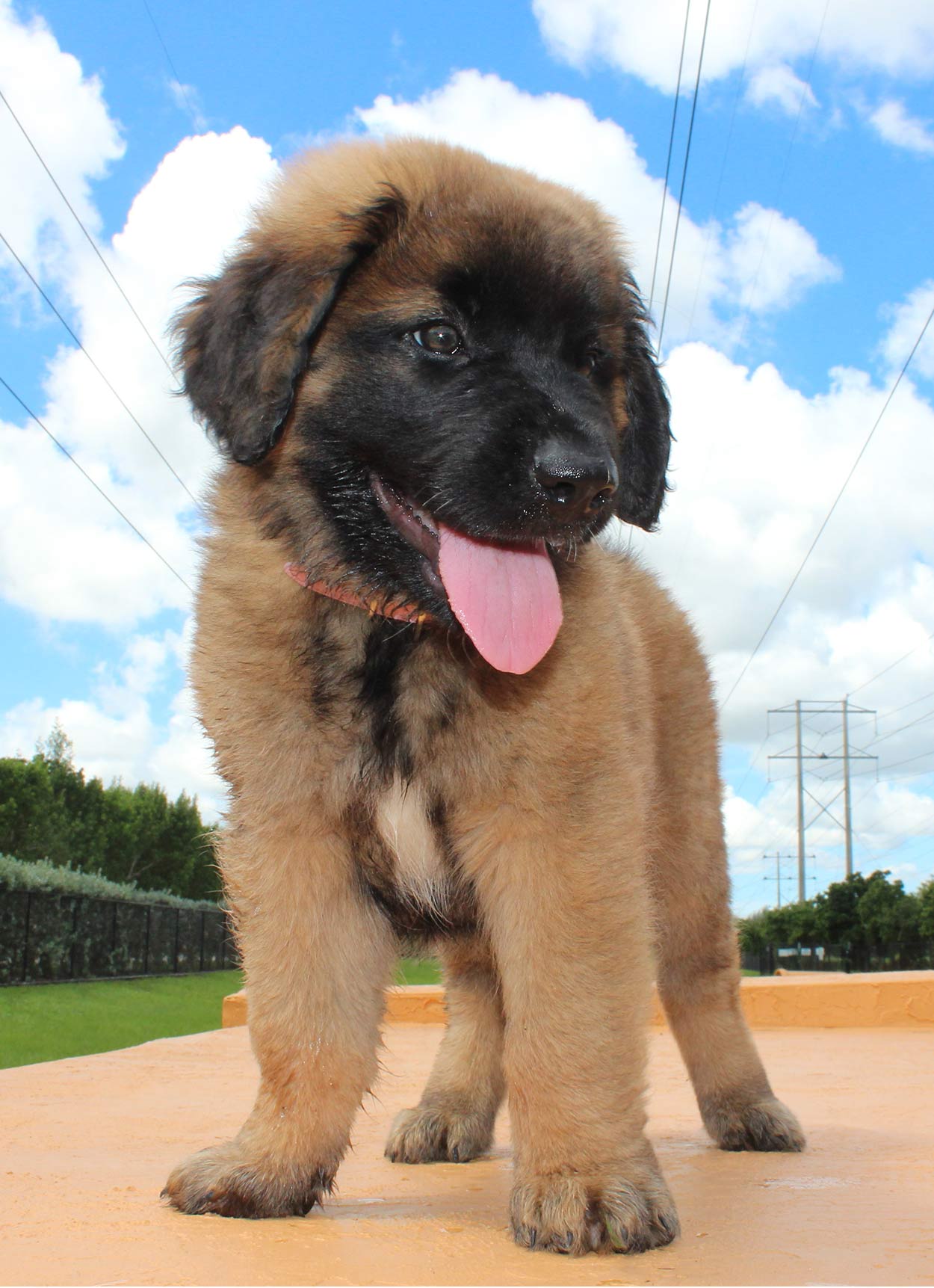
The Leonberger is a giant furry dog with a huge heart for families and children.
This dog breed comes from a guard dog lineage and was bred to be alert, calm, friendly, and highly dependable.
The Leonberger can weigh anywhere from 90 to 140 pounds and stand 25.5 to 31.5 inches tall. Male dogs typically outweigh females.
Leonberger Health
Leonberger dogs can suffer from hip and elbow dysplasia, thyroid dysfunction, eye issues, heart issues, and a gene mutation called polyneuropathy that causes peripheral nerve damage, limited mobility, and pain.
The Leonberger is currently ranked as the 95th most popular dog breed and has an average lifespan of 7 years.
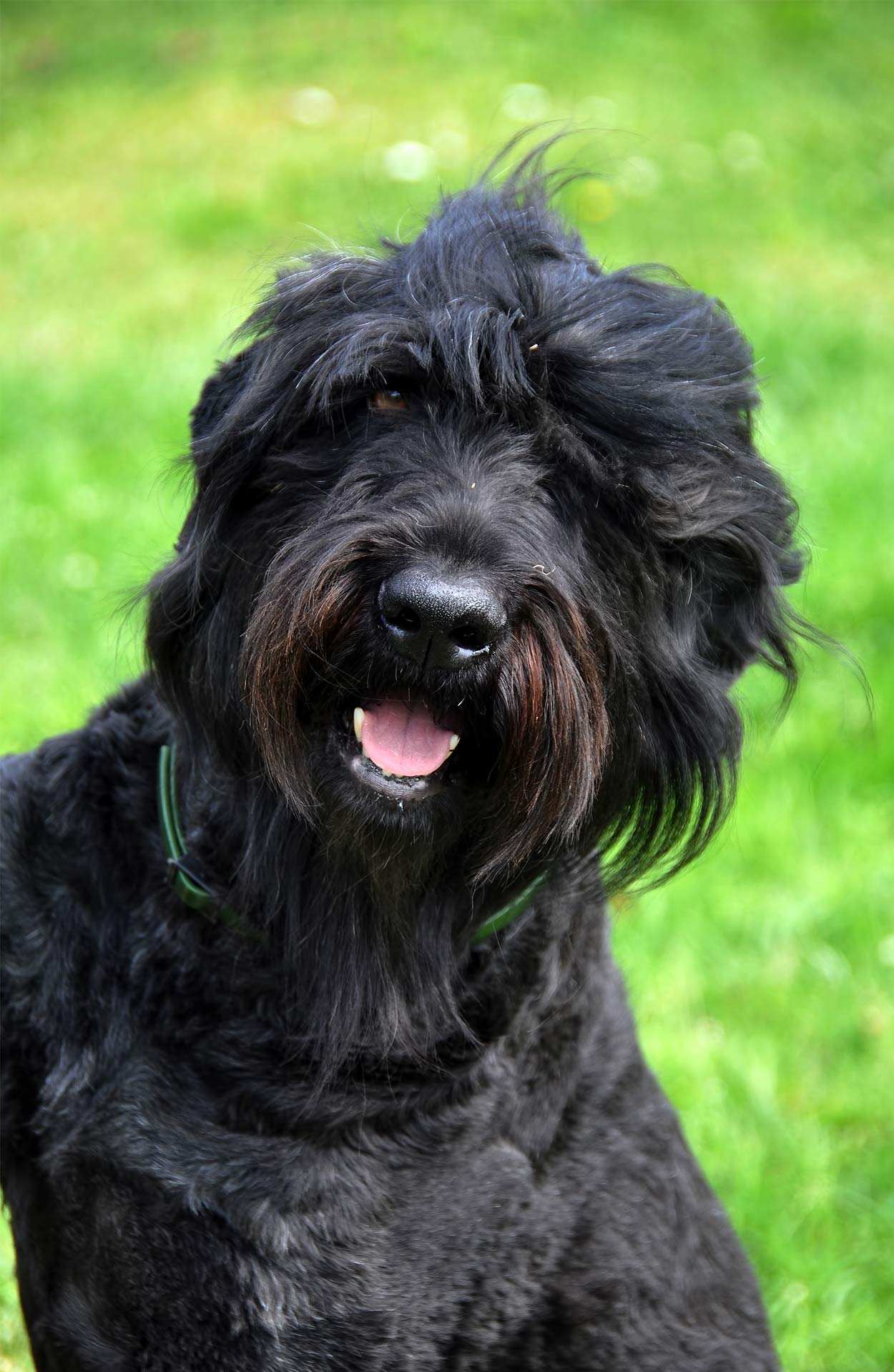
Giant Dog Breeds – Black Russian Terrier
The Black Russian Terrier came to be due to contributions from 17 different large and giant black dog breeds including the Giant Schnauzer, the Newfoundland, the Airedale, and the Rottweiler.
Today’s Black Russian Terrier stands anywhere from 26 to 30 inches tall and weighs approximately 100 to 132 pounds, with males typically outweighing females.
Black Russian Terriers were relatively unknown in the United States until the 1980s and weren’t accepted into the American Kennel Club until 2004. Today, the Black Russian Terrier is currently ranked 119th in the AKC.
These dogs are very loyal, calm, and smart.
They are also very brave and make great working dogs and guard dogs.
Black Russian Terriers bond closely with “their” people and don’t tolerate much alone-time.
Black Russian Terrier Health
Health-wise, the Black Russian Terrier is one of the longer-lived giant dog breeds with an average lifespan of 10 to 12 years.
Hip and elbow dysplasia, bloat, bladder stones, heart disease, epilepsy, cancer, inherited metabolic disease, and adrenal disease are also health concerns associated with this breed.
Giant Dog Breeds – Irish Wolfhound
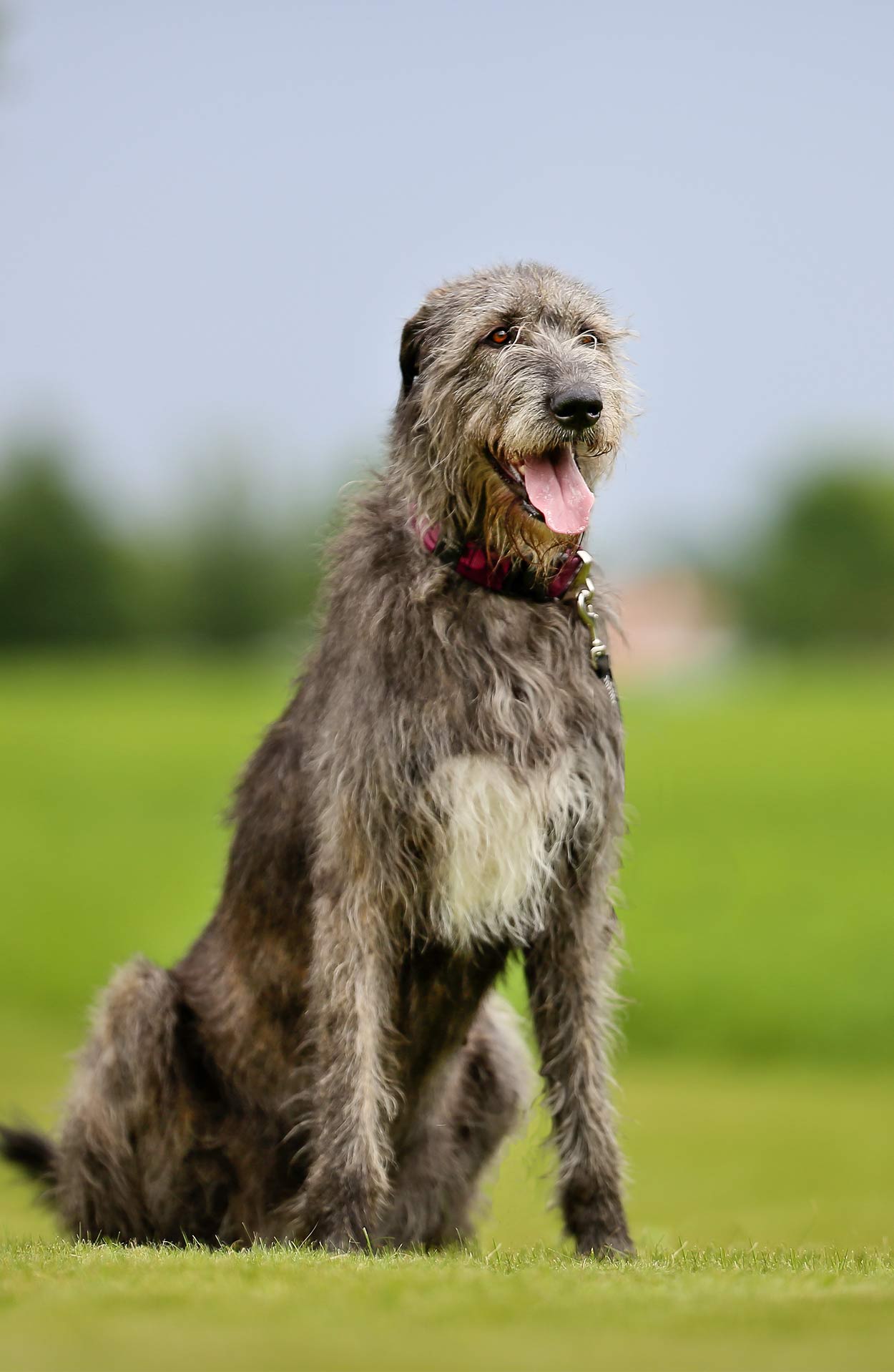
Irish Wolfhounds have been a part of human society since the Middle Ages.
Today, while they are still keen to run and play and can make excellent working or show dogs, Irish Wolfhounds are most happy simply being part of a family.
These gentle, calm, and companionable dogs can weigh 105 to 120 pounds and stand 30 to 32 inches, with males often being bigger than females.
The Irish Wolfhound is currently ranked 73rd in the AKC.
Irish Wolfhound Health
With a short 6 to 8 year lifespan and some significant known health risks, it is vital to work with a reputable breeder or have a rescue puppy screened by your veterinarian.
 (paid link)
Cancer, bloat, heart disease, liver issues, eye disorders, thyroid dysfunction, hip and elbow dysplasia, epilepsy, neurological disorders, blood disorders, and gastrointestinal problems can all plague Irish Wolfhounds.
Giant dog breeds alternatives
Choosing to bring home a giant canine can be an exciting adventure.
But here, it is also imperative to remember that very few giant dog breeds today can be considered truly “healthy.”
The truth is, your giant pooch will warm your heart while he is with you, but these years will pass all too quickly.
Here, it can be worth reconsidering the “giant” aspect of your new canine counterpart and asking yourself if simply “large” would work instead.
Reason being, there are some fabulous large dog breeds that don’t have the significant health concerns most giant dog breeds face.
Large (but not giant) dog breeds such as Siberian Huskies, Australian Shepherds, Belgian Malinois, Beagles, Basenjis, Springer Spaniels, and Collies are great companions for individuals and families.
They are active and fun, strong, and smart. They can make great watchdogs, and they definitely have good health on their side!
It is also worth noting here that one of the best large dog breeds longevity-wise isn’t a purebred dog at all!
The good old-fashioned mutt tends to have a more diverse genetic heritage (something called “hybrid vigor” in scientific circles) that can translate into an average lifespan of nearly two years longer than their purebred counterparts.
 Giant dog breeds
 Giant dog breeds
We hope you have enjoyed this giant dog breeds list and have learned what you need to make a decision about whether a giant dog is the right dog for you!
References and Further Reading
- Collings, D., et al, “The History of the Mastiff,” Mastiff Club of America (MCA), 2018.
- Greer, K.A., et al, “Statistical analysis regarding the effects of height and weight on life span of the domestic dog,” Research in Veterinary Science, 2007.
- Patronek, G.J., et al, “Comparative Longevity of Pet Dogs and Humans: Implications for Gerontology Research,” Department of Veterinary Clinical Studies/Purdue University, 1997.
- Saunders, P., et al, “The Newfoundland and You,” The Newfoundland Club of America, 2010.
- O’Sullivan, N., DVM, “Great Dane Health and Research,” The Great Dane Club of America, 2013.
- Wilson, C., et al, “Saint Bernards: Getting Advice and Help,” Saint Bernard Club of America, 2015.
- Feltenstein, M., et al, “Is the Tibetan Mastiff Right For You?/Why the Tibetan Mastiff May Not Be the Right Dog Breed for You,” American Tibetan Mastiff Association, 2018.
- Schaffer, G., et al, “Neapolitan Mastiff Health Studies/Why Not a Neapolitan Mastiff,” United States Neapolitan Mastiff Club, 2018.
- Zieher, W., et al, “A Healthy Puppy,” The Leonberger Health Foundation, 2013.
- Darrow, C., et al, “History/Health of the Black Russian Terrier ,” The Black Russian Terrier Club of America, 2018.
- Sula, J., DVM, “Irish Wolfhound Health and Longevity,” Irish Wolfhound Club of America, 2018.


Free Labrador Updates!
Get my training tips, news, reviews, and the latest from The Labrador Site delivered to your inbox